Most teams don’t lose deals because their tools are bad. They lose them in the gaps between the tools. A reply sits unread for a day. A spreadsheet of leads never makes it into the CRM. Someone gets interested on a Friday afternoon and goes cold before Monday. Nobody made a mistake, exactly. The information just had to be carried from one app to another by a human being, and humans are busy. What I build with Make and n8n lives in those gaps: small, reliable workflows that move information between your systems automatically, so nothing waits on a person remembering to move it.
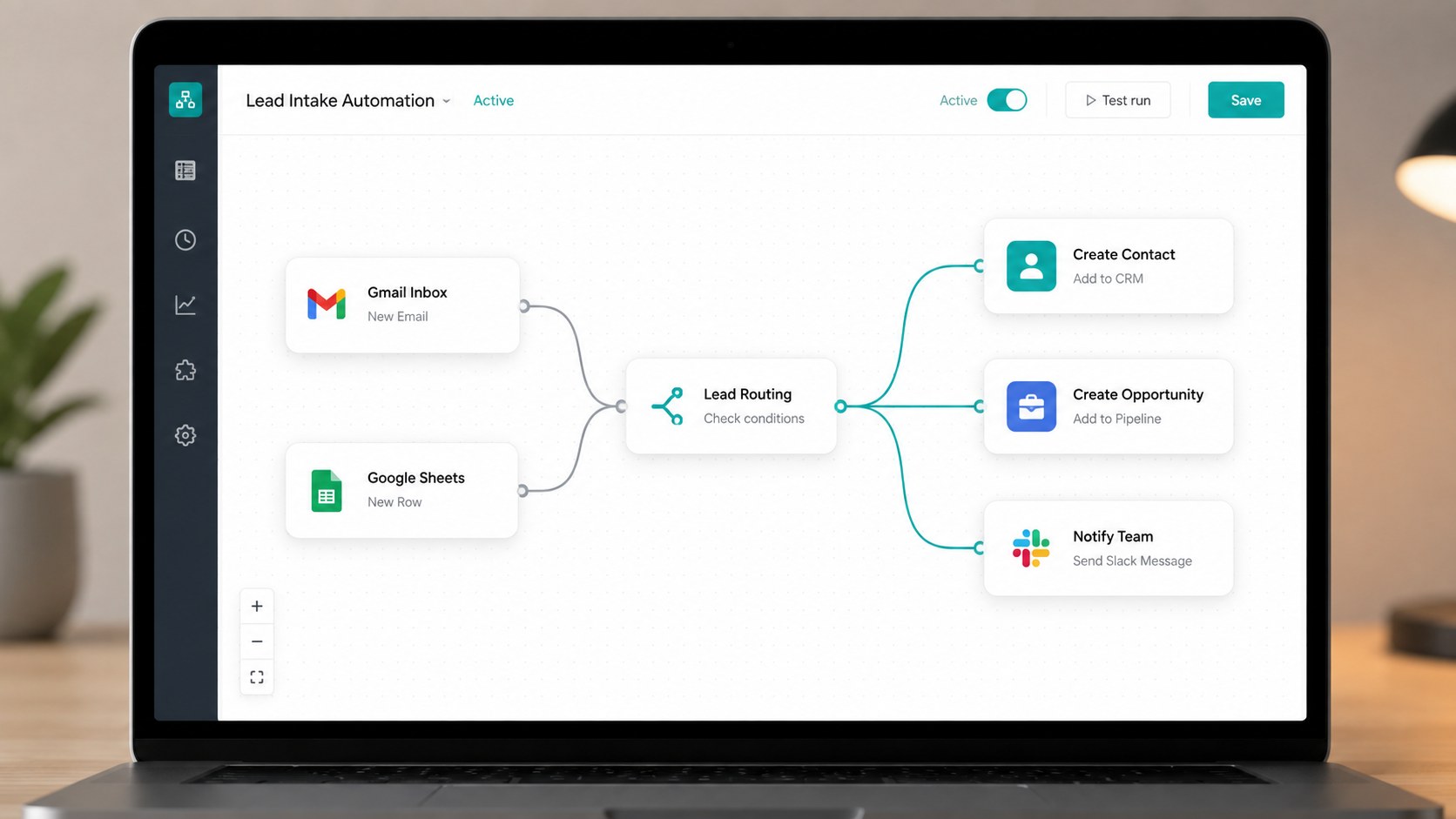
The benefit is easiest to see in what happens when a lead actually shows interest. Today that moment usually means someone opens the CRM, creates a contact, picks the right pipeline, sets the right stage, pastes in what the lead said, and tells the team. That’s five minutes of typing per lead, done from memory, and it gets skipped when things are busy. I automate the entire chain instead. The moment interest is detected, the lead becomes a contact in GoHighLevel, an opportunity is created in the correct pipeline at the correct stage, and a note goes onto the record carrying the real context: what they said, where they came from, and which campaign brought them in. The rep who picks it up isn’t starting from a name and an email address. They’re starting from the conversation. Then Slack gets told, so an interested lead is visible to the team in seconds rather than at the next pipeline review. That last step matters more than it sounds. It turns the automation from a black box running somewhere into a teammate announcing what just came in.
The same thinking applies to the two places where sales work actually happens. Google Sheets is still how most teams plan campaigns and hand off lists, so instead of asking anyone to migrate away from it, I treat it as a real part of the system. New rows get picked up, cleaned, and pushed onward, and results flow back the other way, so the sheet stays current without anyone updating it. People keep working where they already work and the data stops drifting out of sync. The inbox gets the same treatment. Gmail automations watch for what matters, whether that’s new replies, specific senders, or a particular shape of message, then sort, label, and route them instead of leaving a shared inbox to be triaged by whoever opens it first. Routine replies get handled automatically. The ones that need a human get put in front of one immediately.
Beyond those core flows, the same approach quietly removes the small tasks that eat a week: scheduled jobs that keep records in sync, alerts when something stalls or fails, and the hand-offs between apps that would otherwise live on somebody’s recurring calendar reminder. I build every workflow to stay readable on the canvas, so your team can change a stage name, a threshold, or a Slack channel later without hiring a developer to do it.
Underneath, it’s Make and n8n doing what each does best, with visual scenarios that include real branching, filters, and error handling, wired into Google Sheets, Gmail, GoHighLevel, and Slack through their APIs. Triggers fire on webhooks and schedules, data is normalized before it ever reaches the CRM so your records stay clean, and anything that fails raises a notification instead of disappearing silently. What clients get out of it is simple: interest turns into a tracked, assigned, announced opportunity on its own, leads get followed up in minutes instead of days, and the team spends its time on the conversations rather than the copying.